


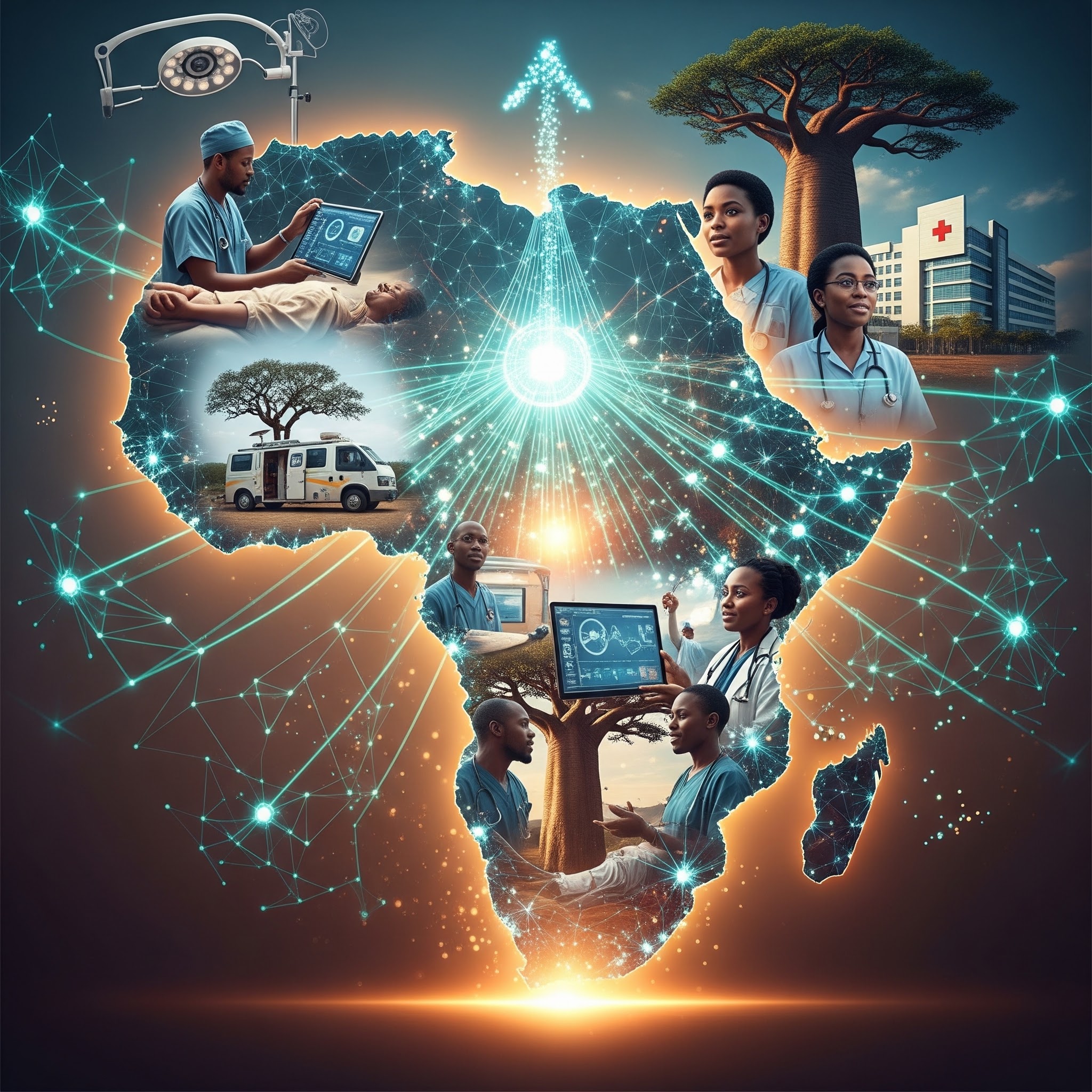
Infectious diseases, exacerbated by the volatile effects of climate change, rapid urbanization, and population displacement, remain a critical challenge to public health across Africa. Traditional surveillance systems are often slow, resource-intensive, and fundamentally reactive. The true promise of a healthier continent lies not in containing the next outbreak, but in preventing it. This is where Artificial Intelligence offers Africa a quantum leap—a chance to transition public health systems from reactive containment to proactive, data-driven prevention.
The Shift to Proactive Health
The core opportunity is the ability of advanced AI and Machine Learning (ML) to process immense, complex, and dynamic Big Data streams, providing accurate foresight into disease spread. By integrating seemingly disparate sources—like high-resolution satellite data for environmental and climate indicators, anonymized mobile network data for human mobility patterns, and standardized public health surveillance records—AI can build a multi-layered predictive risk assessment.
Using sophisticated deep learning techniques, such as Recurrent Neural Networks (RNNs) and Graph Neural Networks (GNNs), this capability moves beyond simple correlation to true prediction. It allows health authorities to identify complex, non-linear relationships and dependencies, giving them a critical lead time—often between 4 to 12 weeks—to implement targeted, preemptive interventions before an outbreak peaks. This not only saves lives but dramatically reduces the resource drain of late-stage emergency response.
A Strategic Framework for Systemic Adoption
To realize this vision continent-wide, a strategic framework is required to embed AI-driven systems into national and continental health policies. ALG proposes the following framework for government, regional bodies, and development organizations:
- Foundational Data Integration & Ethical Governance: Establish secure, scalable data pipelines to harmonize diverse, real-time data streams across regions. Crucially, this must be governed by strict ethical and privacy protocols, especially for sensitive data, ensuring responsible AI principles are the bedrock of the system.
- Deployment of a User-Centric Early Warning System (EWS): Move rapidly to deploy secure, user-friendly digital platforms (web/mobile) that visualize AI-generated risk maps and actionable alerts. The system’s design and operational relevance must be continuously validated through field trials in collaboration with local health officials to ensure adoption.
- Local Capacity Building and Policy Integration: The technology is only as good as the hands that use it. National Ministries of Health and public health bodies must work with partners to establish comprehensive training programs for local professionals in the use and interpretation of the EWS outputs. This training, paired with official policy endorsement, ensures the system is fully integrated into existing disease control strategies, guaranteeing sustainability.
- Open Ecosystem for Accelerated Research: Commit to open-source licensing for the underlying AI models and architectures. This accelerates scientific collaboration, encourages a contributor base for technical sustainment, and allows the foundational methodology to be adapted to other vector-borne diseases and climate-health dynamics across the continent.
- Systemic Financial Integration: Secure official endorsement from continental bodies (like the Africa CDC) and national governments to incorporate the operational costs of the EWS into their regular public health budgets, guaranteeing long-term financial viability.
The technology to safeguard African communities against the next wave of infectious diseases exists today. It requires vision, political will, and concerted action. We urge African governments, regional organizations, civil society, and development partners to:
- Invest strategically in AI-driven public health initiatives, recognizing them as essential national infrastructure, not temporary projects.
- Endorse a unified ethical and data-sharing framework to unlock the power of Big Data for public good.
- Collaborate with organizations that possess both the technical depth and the local, contextual knowledge—like Africa Label Group—to ensure solutions are not only innovative but are relevant, sustainable, and integrated into the very fabric of African health systems.
By embracing the power of AI, Africa can move from managing crises to mastering prevention, securing a healthier, more resilient future for all its people.
D.K.A ([email protected])
Innovation and entrepreneurship specialist