

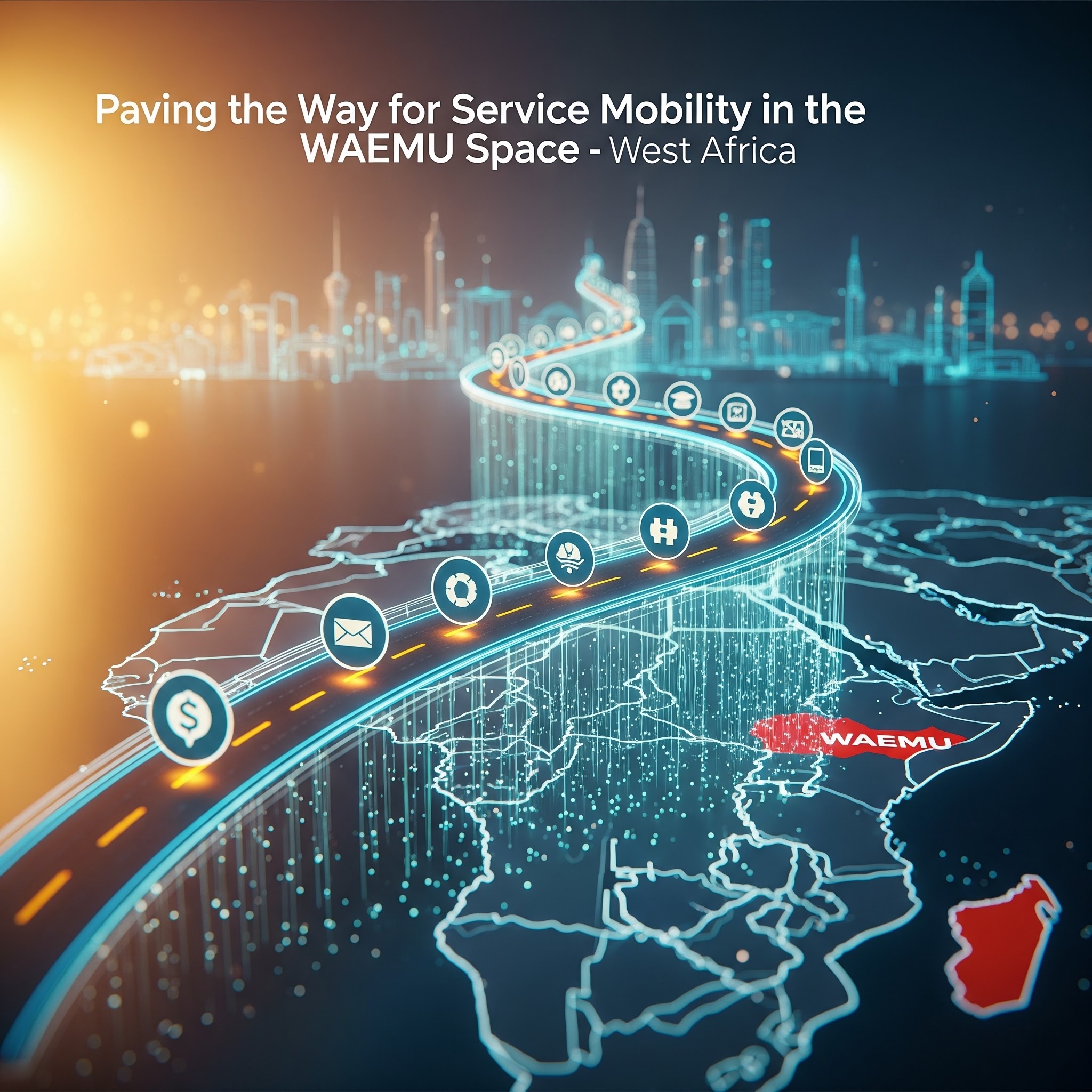
Project Spotlight: Study for the preparation of a framework Document on the free movement of services in the WAEMU space
The establishment of a true Common Market within the West African Economic and Monetary Union (WAEMU) hinges on the free movement of goods, people, capital—and increasingly—services. Services are the backbone of the Union’s economy, accounting for nearly half of the average GDP (48.6%) and serving as a major engine for job creation across the member states. Recognizing this critical role, the WAEMU Commission launched a vital study in 2017 to craft the framework for unrestricted service circulation.
The Intervention
The objective of this intervention was clear: to prepare a foundational document that establishes the necessary conditions and mechanisms for the free movement of services within the WAEMU zone. This work is essential to unlocking the full potential of the regional common market and fostering deeper economic integration.
ALG’s Approach: A Tailored Methodology
To tackle this complex and crucial task, ALG, leveraging its extensive experience supporting the WAEMU in various sectors, employed a rigorous and collaborative methodology:
- Diagnostic Phase (Legal and Economic Review): The initial step involved a comprehensive review of the existing legal, regulatory, and institutional frameworks governing services in each WAEMU member state. This was complemented by an in-depth economic analysis to identify key service sectors, assess their contribution to national economies, and pinpoint the specific barriers hindering their cross-border movement.
- Stakeholder Consultation: Recognizing that a framework must be practical and widely accepted, ALG conducted extensive consultations. This involved high-level meetings with national ministries, regulatory bodies, professional associations, and private sector representatives across the Union. This inclusive approach ensured the framework would address real-world challenges and gain broad buy-in.
- Comparative Analysis: ALG performed a comparative analysis of international best practices, particularly drawing lessons from other regional economic communities (like the EU, ECOWAS, and CEMAC) that have successfully implemented free movement of services protocols. This provided critical insights into effective implementation strategies and potential pitfalls.
- Framework Document Development: Based on the diagnostic findings and consultations, ALG drafted the framework document. This included proposing a clear definition of services, identifying priority sectors for immediate liberalization, outlining principles for mutual recognition of professional qualifications, and suggesting mechanisms for regulatory cooperation and dispute resolution.
- Validation and Roadmapping: The draft framework was presented to the WAEMU Commission and relevant expert committees for rigorous review and validation. Finally, ALG provided a detailed roadmap for the phased implementation of the framework, including timelines and required institutional reforms.
A Commitment to Regional Integration
This study is a testament to the WAEMU Commission’s commitment to deepening regional integration. For years, ALG has been a trusted partner to the Commission, contributing its technical expertise to key policy areas, from transport infrastructure to institutional development. The successful completion of this study marks a significant step toward creating a truly unified economic space where services—and the growth they drive—can move freely across borders, benefiting citizens and businesses throughout the Union.