Home >> Shop

Feasibility study for the creation of the groupage system in Togo

The movement of goods is the heartbeat of a growing economy. In Togo, the demand for reliable, efficient consolidation and transport—known as “groupage”—between the port city of Lomé, the interior, and the wider West African region is critical.

We’ve just completed a foundational feasibility study, sponsored by The World Bank, to design a robust, scalable groupage logistics system for the country. This isn’t just about moving boxes; it’s about building the technical and operational backbone for a new era of trade.

Here is a look inside the blueprint for this ambitious project.

Part 1: The Bricks and Mortar (Technical & Logistics Architecture)

A world-class logistics system starts with the physical infrastructure and the equipment that makes the work possible.

  1. The Fleet: Equipment That Goes the Distance

Our focus here is on optimization and reliability. We are specifying two primary vehicle types to meet diverse needs:

  • Light Commercial Vehicles (LCVs): Essential for nimble, efficient intra-city collection and last-mile distribution within Lomé and other urban areas.
  • Medium-Duty Trucks (MDTs): The workhorses for inter-city and sub-regional routes, selected based on fuel efficiency, capacity, and compatibility with West African road conditions.

Beyond vehicles, the material handling process at consolidation centers must be streamlined with equipment like pallet jacks, hand trucks, and both fixed and portable roller conveyors to ensure safety and speed.

  1. The Hubs: Strategic Site Selection

The location of consolidation centers is a strategic decision. We’ve established clear criteria for site selection: accessibility to major transport arteries, high security, and significant scalability.

  • Primary Hubs (e.g., Lomé): Large-scale facilities designed for maximum throughput, capable of cross-docking and complex sorting.
  • Secondary Distribution Centers: Smaller nodes in key interior cities to ensure efficient onward distribution.

The internal design of these sites follows a strict logical flow to prevent bottlenecks: Inbound Receiving → Inspection/Weighing → Sorting/Staging → Outbound Loading → Dispatch.

  1. The Paper Trail: Standardization and SOPs

Efficient operations require clear documentation. We are developing standardized documents to manage liability, customs clearance, and tracking across the network:

  • Groupage Bill of Lading (GBL)
  • Cargo Manifests and Waybills
  • Proof-of-Delivery (POD) receipts

These documents are tied to Standard Operating Procedures (SOPs) that govern every step, from generation to reconciliation, ensuring accountability at every node.

Part 2: The Future is Digital (IS Integration)

Physical movement must be matched by digital transparency. The study mandates a critical assessment of how information technology can turbocharge efficiency.

The Digitalization Question

Before selecting a system, we are evaluating the digital context on the ground, particularly the smartphone penetration rate among target retailers and sub-regional traders. This helps us determine the optimal level of digitalization: Do we aim for a fully paperless system? How central will real-time tracking be?

The Information System (IS) Strategy

The core of our digital plan involves two options for the Logistics and Warehouse Management System (WMS):

  1. Off-the-Shelf IS: Surveying and evaluating existing market solutions that are proven to handle complex groupage operations in a West African environment, requiring features like multi-currency support and decentralized network management.
  2. Custom IS Development: Should existing solutions fall short, we have defined the functional requirements for a bespoke system. This tailor-made solution must integrate automated booking, provide real-time geo-location tracking for all shipments, support digital Proof-of-Delivery, and seamlessly integrate with financial systems.

By merging strategic physical infrastructure with cutting-edge digital tools, Togo is poised to create a logistics system that is not only robust and efficient but also ready to drive cross-border trade and economic growth.

Read More

Elaboration de modules de renforcement des capacités des jeunes pour la résilience et la prévention de l’extémisme violent

  • Zone d’intervention: Mali, Niger, Burkina Faso
  • Client: UNESCO
  • Période de la mission: Janvier-Février 2022
  • Titre du projet: Renforcer la résilience des jeunes face à l’extrémisme violent et leur engagement pour la construction de la paix à travers l’éducation

L’objectif principal de cette mission est de disposer d’une ébauche de modules de formation sur la base du rapport issu de l’évaluation des besoins des jeunes qui a été conduite dans les 3 pays. Les modules de formation seront utilisés par des formateurs/facilitateurs pour le renforcement des capacités des jeunes (filles et garçons) en matière de résilience, de construction de la paix et de l’état de droit et des compétences leur permettant d’être des agents de la paix.

Read More

Study to identify the capacity building needs of young people in Burkina Faso, Mali and Niger

Capacity Building Needs Assessment and Engagement Mechanisms for Youth as Actors for Peace and the Rule of Law in the Sahel RegionI. 

Mission Context and Core Information

Field

Detail

Title of the Mission

IDENTIFICATION OF YOUTH CAPACITY BUILDING NEEDS IN BURKINA FASO, MALI, NIGER AND SENEGAL AND MECHANISMS ENABLING THEM TO BECOME ACTORS FOR PEACE AND THE RULE OF LAW

Countries of Intervention

Burkina Faso, Mali, Niger, and Senegal (Senegal is included in the objective but often listed separately as an area for consultation rather than a primary ‘intervention’ country for some projects in this context)

Client/Partner

UNESCO regional office in Dakar

Period of Execution

July – August 2021

  1. Comprehensive Mission Objective and Scope

The overarching objective of this critical assessment mission was to engage with a diverse range of relevant stakeholders across the four targeted countries—Burkina Faso, Mali, Niger, and Senegal—with a particular and central focus on the youth population itself.

The mission was specifically tasked with two primary, interconnected deliverables:

  1. Identification of Capacity Building Needs: To determine, through rigorous consultation, the specific knowledge, skills, technical, and institutional capacities that young people in these nations require to effectively participate in and contribute to peacebuilding efforts and the promotion of the Rule of Law within their respective communities.
  2. Establishment of Enabling Mechanisms: To propose concrete, implementable mechanisms, frameworks, and support structures necessary to facilitate the sustained engagement and empowerment of these youth as proactive and legitimate actors for peace and the Rule of Law.

2. Foundational Methodological Approach

Crucially, the entire consultation and identification process was mandated to employ a gender-responsive approach. This means the mission sought to:

  • Acknowledge and analyze the different and specific needs, barriers, and opportunities facing young women and young men.
  • Ensure that the proposed capacity building and engagement mechanisms are equitable, addressing gender-based inequalities, and actively promoting the full and meaningful participation of young women in all peace and governance processes.

3. Strategic Rationale and Expected Impact

The mission was conceived out of the recognition that young people in the Sahel region, while often disproportionately affected by conflict, political instability, and weak governance, are also the region’s largest demographic asset and most vital resource for long-term stabilization. By identifying and addressing their specific capacity gaps and establishing clear pathways for civic engagement, the project aimed to:

  • Mitigate Conflict Drivers: Equip youth with the tools to resolve disputes non-violently, counter radicalization and violent extremism, and promote social cohesion.
  • Strengthen Democratic Governance: Enhance youth literacy and participation in legal frameworks, justice systems, and democratic processes, thereby bolstering the Rule of Law.
  • Inform Future Programming: Provide UNESCO and its partners with the evidence base and strategic direction needed to design and implement targeted, effective, and contextually appropriate youth empowerment programs in the Sahel.

The two-month period was dedicated to intensive fieldwork, stakeholder interviews (including government officials, civil society organizations, community leaders, and particularly youth networks), focus group discussions, and data synthesis to deliver a comprehensive report detailing the findings and recommendations.

Read More

Etude pour l’identification des besoins en renforcement des capacités des jeunes au Burkina Faso, Mali et Niger

  • Tire de la mission: IDENTIFICATION DES BESOINS EN RENFORCEMENT DES CAPACITES DES JEUNES AU BURKINA FASO, AU MALI, AU NIGER ET AU SENEGAL ET DES MECANISMES LEUR PERMETTANT DE DEVENIR DES ACTEURS POUR LA PAIX ET L’ETAT DE DROIT
  • Pays d’intervention: Burkina Faso, Mali, Niger
  • Client: UNESCO
  • Période: Juillet-Août 2021

Objectif de la mission

Consulter les parties prenantes concernées au Burkina Faso, Mali, Niger et Sénégal dont les jeunes, pour identifier les besoins en renforcement des capacités de ces derniers ainsi que les mécanismes nécessaires pour qu’ils puissent s’engager en tant qu’acteurs pour la paix et l’état de droit dans leur communauté, selon une approche réactive en matière de genre.

Pour plus d’information, contactez-nous: [email protected]

Read More

Mid-term evaluation of the “Youth Empowerment through TVET in The Gambia” project

  • Project: Youth Empowerment through TVET in The Gambia
  • Country: The Gambia
  • Client: UNESCO
  • Period: January-March 2022

The evaluation team will aim to achieve the following objectives:
i) Assess the appropriateness of the project strategy and design in relation to outcomes and progress made;
ii) Assess the strategic positioning of the project within the UN system and the broader landscape of TVET-related actors and programmes, taking into account relevant enabling policy frameworks to which the work of the project responds;
iii) Assess how the project aligns with The Gambia’s needs, as well as SDG targets, relevant international policies and norms, and UNESCO strategic objectives and Global Priorities;
iv) Assess contributions towards gender transformative change;

v) Assess managerial arrangements and work planning; finance and co-finance, risks to sustainability (financial, socio-economic, institutional framework and governance, environmental, etc.);
vi) Evaluate the current exit strategy and likelihood of sustainability of activities and preliminary project gains; and
vii) List obstacles the project confronted, and lessons learned moving forward.

Read More

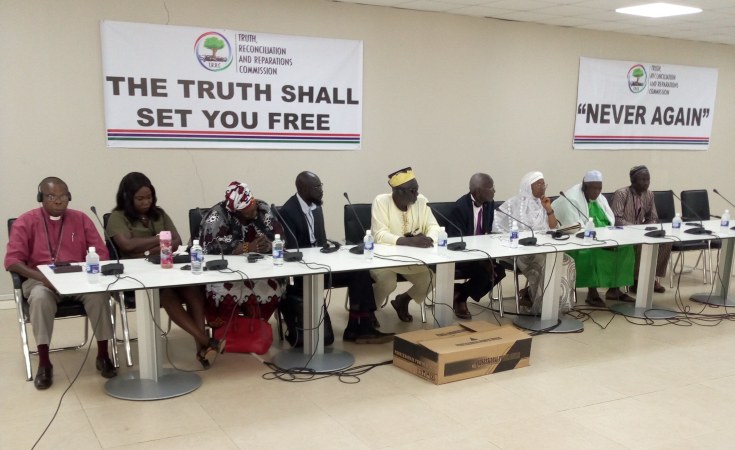
External Terminal Evaluation of the Transitional Justice & Human Rights Project

  • Project title: Support the capacity of the Government and national stakeholders to establish credible transitional justice processes and mechanisms that promote reconciliation and sustainable peace in The Gambia.
  • Country: The Gambia
  • Client: UNDP
  • Period: June-July 2021

The evaluation had five key objectives:

  1. To assess the contribution of the project activities to the realization of project objectives and outcomes by determining how relevant, efficient, effective, and sustainable the project is.
  2. To identify and provide analysis of the factors that have either positively or negatively affected/impacted the project beneficiaries.
  3. To recognize any possible catalytic effects of the project.
  4. To assess the project’s contribution towards national strategies on transitional justice and human rights, as well as peacebuilding, including its contribution towards strengthening Government-led coordination and planning in this sector.
  5. To provide recommendations for improving UN support to transitional justice and human rights in The Gambia, including the country’s sustainable peace agenda on transitional justice and human rights.
Read More

Ensuring E&S Compliance: A Technical Review Approach for Orezone’s Bomboré Project

Client: Orezone

Country: Burkina Faso

Intervention Period: April-May 2022

The Orezone Bomboré Project necessitated a robust review of its Environmental and Social (E&S) requirements. As the resource personnel, supported by the ALG expertise, a focused and systematic technical approach was implemented to ensure comprehensive E&S compliance and mitigate potential risks.

Our methodology, conducted during April-May 2022, was structured around five key technical objectives:

  1. Comprehensive Section Review and E&S Issue Identification:

The initial phase involved a detailed technical review of all project sections. The aim was to systematically identify and document all existing and potential environmental and social issues pertinent to the Bomboré Project’s scope and location in Burkina Faso. This involved cross-referencing project plans with established E&S standards.

  1. Technical Assessment of Issues, Risks, and Impacts:

Following identification, a technical assessment was performed to evaluate the significance of the issues, risks, and potential E&S impacts directly associated with the planned operational activities. This phase utilized established risk assessment matrices and impact evaluation methodologies to categorize and prioritize potential harm to the environment and local communities.

  1. Informing E&S Selection Documentation:

A critical step involved translating the findings into practical documentation. We were responsible for accurately populating the required technical sheets and forms used for the environmental and social selection (screening) of sub-projects. This ensured that all subsequent project components would be evaluated based on the identified E&S risks.

  1. Technical Engagement with Local Authorities:

Effective E&S management requires local coordination. We engaged in direct technical consultation and exchange with the technical departments within the town halls of the sites hosting the project sections. This dialogue was crucial for aligning project activities with local environmental regulations and social concerns, ensuring stakeholder buy-in, and gathering site-specific technical data.

  1. Validation, Classification, and Work Determination:

The final phase involved the validation of the screening results. This led to the formal E&S classification of the project components. Based on this classification, the necessary environmental and social work—the technical mitigation and enhancement measures—was determined. The ultimate goal of this entire approach was the preservation of the tranquility and well-being of the neighboring and adjoining populations throughout the project lifecycle.

This systematic and technically driven approach was instrumental in providing Orezone with a clear, compliant, and responsible pathway forward for the Bomboré Project.

Read More

Prescription Environnementale et Sociale Route de contournement du camp du Projet de Bomboré 

  • Client: OREZONE
  • Pays: Burkina Faso
  • Période de l’intervention: Avril-Mai 2022

L’objectif de cette activité est de (i) parcourir l’ensemble des tronçons et observer les enjeux environnementaux et sociaux en présence, (ii) apprécier les enjeux, risques et impacts environnementaux et sociaux potentiels liés aux opérations envisagées, (iii) renseigner les fiches et formulaires de sélection environnementale et sociale des sous-projets, (iv) prendre contact et échanger avec les directions techniques des mairies des lieux d’accueil des tronçons et (v) valider les résultats du screening, faire la classification et déterminer le travail environnemental et social nécessaire toujours dans le souci de préserver la quiétude des populations riveraines/mitoyennes.

Read More

Rural Development and Improvement of Irrigation System project impact evaluation

  • Client: Korea Rural Economic Institute (KREI)
  • Country: Ghana
  • Period: August-September 2021

The overall objective of this consultancy is to prepare products that document the extent to which the subject project’s outcomes and impact have been achieved: What is the impact of the project on rural development and improvement of the irrigation system for vegetable production in the target community?

Read More

Sahel region community conflicts assessment

  • Client: International Republican Institute (IRI)
  • Countries of the assessment: Benin, Burkina Faso, Côte d’Ivoire, Ghana, Togo
  • Period: September-November 2021
  • Number of experts assigned: 4 key experts and 10 research assistants

As violent extremist organizations expand their zones of influence in the central Sahel and increasingly threaten northern border communities in the Littoral States, IRI seeks to integrate the best practices and lessons learned from rigorously evaluated community-led prevention and countering violent extremism (P/CVE) interventions in target border communities into a regional P/CVE strategy ratified by Burkina Faso, Ghana, Côte d’Ivoire, Togo, and Benin through coordination with the Accra Initiative and the Economic Community of West African States (ECOWAS).

Read More